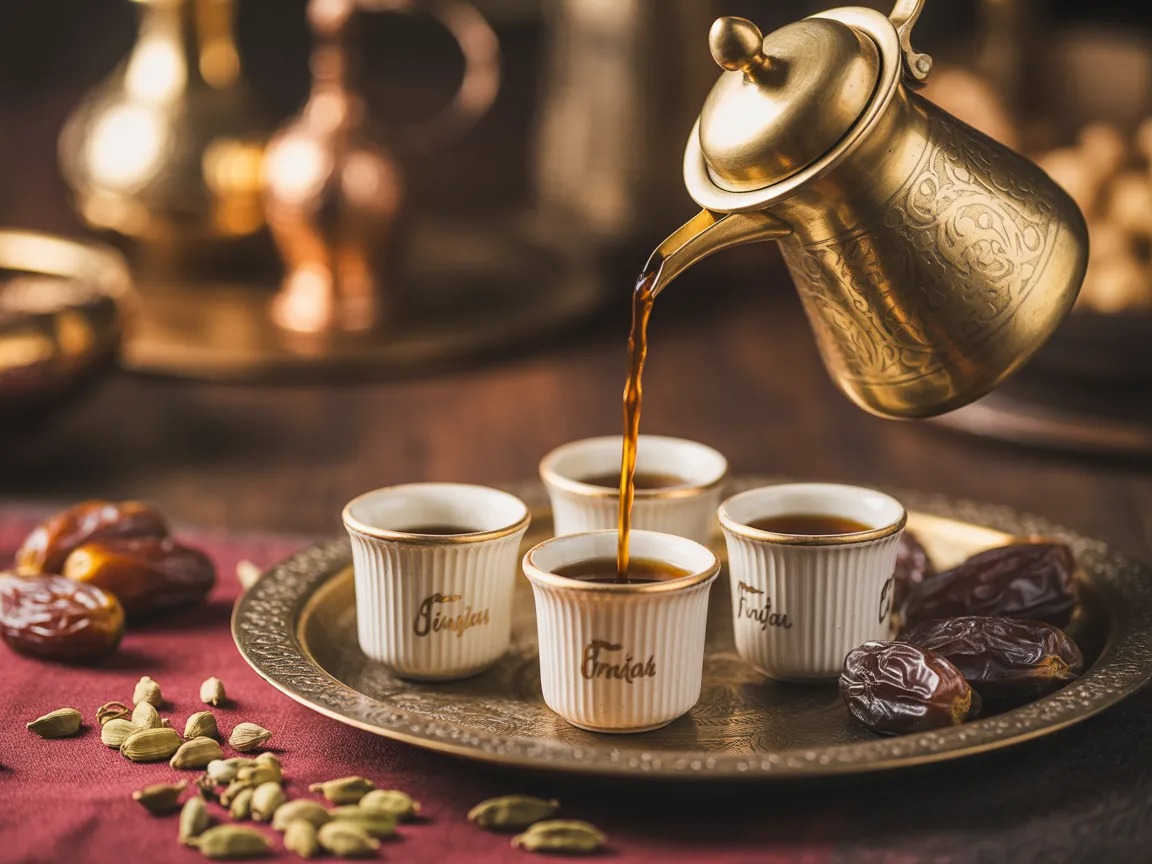
Arabic Coffee: The Ancient Brew That Makes Your Morning Espresso Feel Basic
You think your morning coffee routine is sophisticated? Cute. Arabic coffee — known as Qahwa — has been hosting philosophers, poets, and desert traders around the fire for centuries before your single-origin flat white was even a concept. This isn’t just coffee. It’s a cultural institution served in tiny cups with big energy, flavored with cardamom and sometimes saffron, and carrying the kind of warm hospitality that makes every guest feel like royalty. The best part? It’s surprisingly simple to make at home, takes under 15 minutes, and will absolutely make your kitchen smell like the most exotic place on earth. Ready to brew something legendary?
Quick Look of the Recipe
| 🧠 Skill Level | ⏱️ Prep Time | 🔥 Cook Time | ⏰ Total Time |
|---|---|---|---|
| Beginner | 2 mins | 10 mins | 12 mins |
| 🍽️ Servings | 📋 Course | 🌍 Cuisine | 🔥 Calories |
|---|---|---|---|
| 4 small cups | Beverage | Arabic / Middle Eastern | ~5 kcal per serving |
Why This Recipe is Awesome
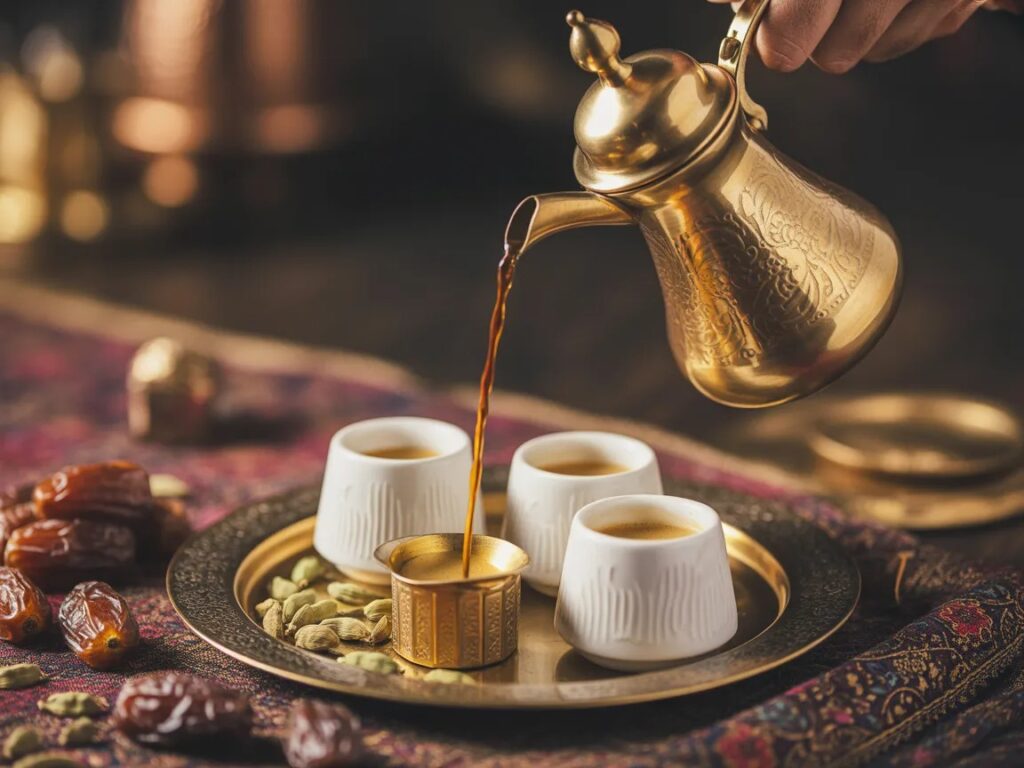
Arabic coffee isn’t just a drink — it’s a whole experience. Here’s why you need it in your life:
- It’s light, aromatic, and completely different from anything you’ve tried before. No milk, no sugar overload, no elaborate equipment. Just clean, spiced coffee that’s as calming to make as it is to drink.
- The cardamom is a game-changer. That warm, floral spice transforms plain coffee into something that smells like a Moroccan souk and tastes like a hug from a very sophisticated stranger.
- Practically zero calories. Traditional Arabic coffee is served without milk or sugar, which means you can drink it guilt-free while eating a date or three and calling it balanced.
- It’s genuinely impressive to serve to guests. Pull out a dallah (the traditional Arabic coffee pot) or even just a nice small pitcher and watch people immediately think you’re worldly and cultured. It’s idiot-proof, and yet somehow looks like you really know what you’re doing.
- Ready in 12 minutes flat. Less time than it takes to stand in a coffee shop queue, and infinitely more interesting than whatever they’d pour you anyway.
Ingredients You’ll Need
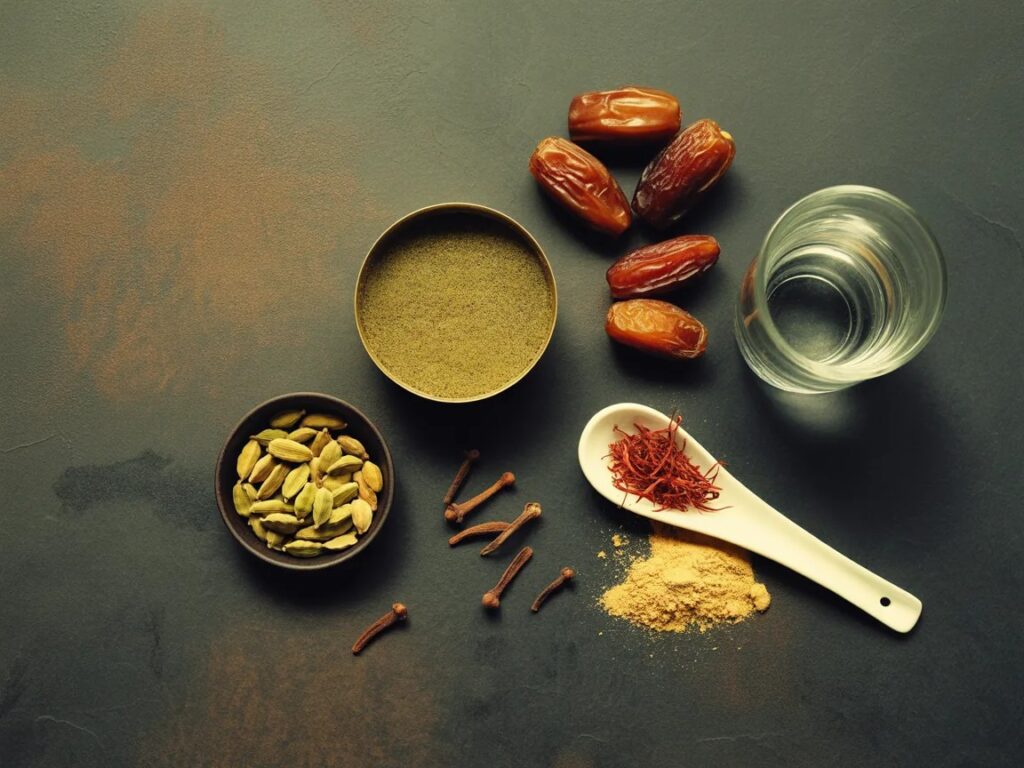
Short list, big flavor — here’s what you need:
- [ ] 4 cups water — the foundation, use filtered if you can
- [ ] 3 tbsp lightly roasted Arabic coffee grounds — pale green or light golden roast, NOT your dark espresso beans (this matters enormously)
- [ ] 4–6 cardamom pods, lightly crushed — the soul of the recipe, non-negotiable
- [ ] ¼ tsp ground cardamom — for extra depth
- [ ] A pinch of saffron threads (optional) — makes it golden and extra luxurious; skip if your budget has feelings
- [ ] ½ tsp ground ginger (optional) — adds warmth and a subtle kick
- [ ] 2–3 whole cloves (optional) — for a deeper, slightly spiced complexity
- [ ] Dates for serving — the traditional accompaniment and genuinely the perfect pairing
Recommended Tools
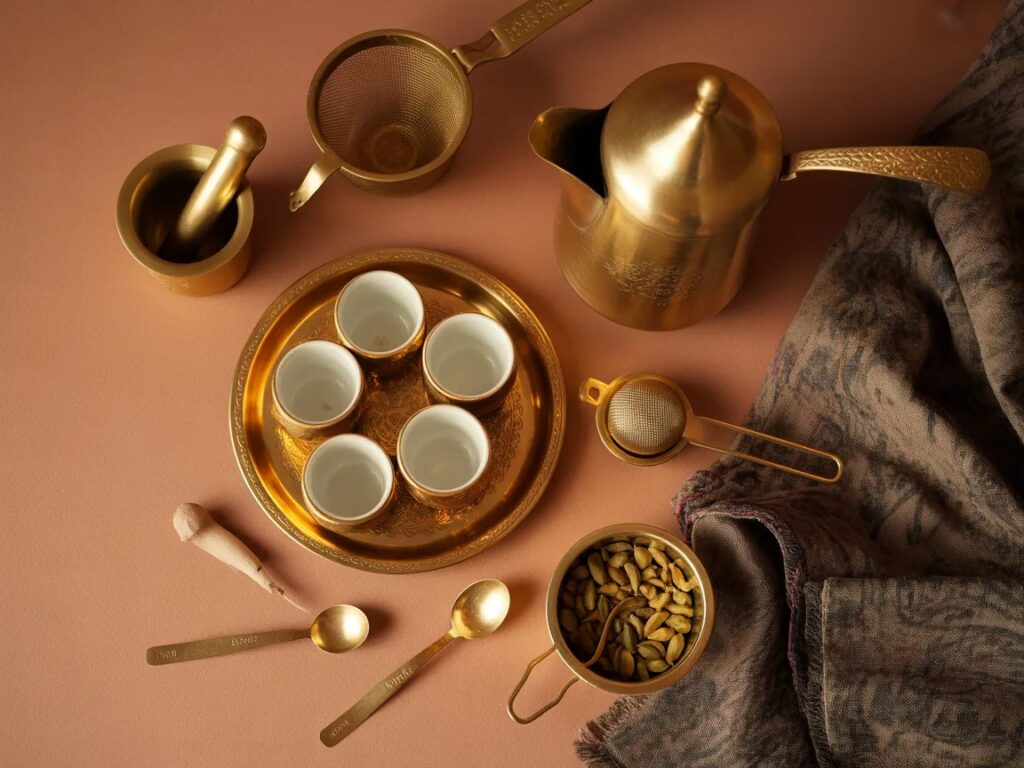
You don’t need a lot — just the right things:
- Dallah (traditional Arabic coffee pot) — the authentic vessel of choice; beautiful, functional, and makes the whole experience feel intentional. If you don’t have one, a small saucepan works fine
- Small saucepan — your everyday alternative to the dallah for actual brewing
- Fine mesh strainer or cheesecloth — essential for straining out the grounds and cardamom pieces; nobody wants to chew their coffee
- Small Arabic coffee cups (finjan) — handleless, delicate, and the correct size for this brew. Regular espresso cups work as a substitute
- Measuring spoons — for getting the ratios right the first time
- Mortar and pestle (optional) — for crushing whole cardamom pods fresh, which releases significantly more aroma than pre-ground
Step-by-Step Instructions
1. Bring the water to a boil. Pour 4 cups of water into your dallah or small saucepan and bring it to a full boil over medium-high heat. While it heats up, take a moment to appreciate the fact that you’re about to make something that dates back to 15th-century Yemen.
2. Add the coffee grounds. Once boiling, reduce the heat to medium-low and stir in the Arabic coffee grounds. Use lightly roasted coffee — the pale, almost greenish roast traditional to Arabic coffee. Dark roast completely changes the flavor profile and misses the point. Stir gently and let it simmer for 5 minutes.
3. Add the spices. Add your crushed cardamom pods, ground cardamom, and any optional spices — saffron, ginger, cloves. Stir once, then leave it alone. Let everything steep together over low heat for another 3–4 minutes. Your kitchen should now smell extraordinary.
4. Rest and settle. Remove the pot from heat and let it sit for 2 minutes. This allows the grounds to settle to the bottom, which makes straining cleaner and easier. Don’t rush this step — patience is part of the process.
5. Strain and pour. Pour the coffee slowly through a fine mesh strainer into your serving dallah or directly into small cups. Pour gently and low to avoid disturbing the settled grounds. If using a cheesecloth, even better — you’ll get a beautifully clear, golden brew.
6. Serve immediately. Pour into small Arabic coffee cups — fill them only halfway, as is traditional — and serve alongside dates. Refill cups as requested. The traditional signal that a guest has had enough is to gently wiggle the cup side to side when handing it back. Teach your guests this before you serve — it’s a genuinely charming detail.
Nutrition Facts
╔══════════════════════════════════╗
║        Nutrition Facts           ║
║    Servings per Recipe: 4        ║
║    Serving Size: ~½ cup (120ml)  ║
╠══════════════════════════════════╣
║ Calories               5         ║
╠══════════════════════════════════╣
║                   % Daily Value* ║
║ Total Fat             0g    0%   ║
║ Cholesterol           0mg   0%   ║
║ Sodium                5mg   0%   ║
║ Total Carbohydrate    1g    0%   ║
║   Dietary Fiber       0g    0%   ║
║   Total Sugars        0g         ║
║ Protein               0g         ║
╠══════════════════════════════════╣
║ Caffeine           ~30–40mg      ║
║ Calcium              1%          ║
║ Iron                 1%          ║
╚══════════════════════════════════╝
*Percent Daily Values based on a
2,000 calorie diet.
Note: Calories increase if dates
or sugar are added.
Recipe Variations
- Rose water Arabic coffee: Add ½ teaspoon of rose water to the pot right before straining. It adds a delicate, floral dimension that makes the coffee taste like it was brewed in a garden — elegant, aromatic, and genuinely beautiful.
- Saffron-heavy golden Qahwa: Double the saffron threads and let them bloom in a tablespoon of hot water before adding to the brew. The coffee turns a gorgeous deep golden color and takes on a rich, complex flavor that feels truly special-occasion worthy.
- Spiced winter version: Add a small cinnamon stick and two extra cloves during brewing for a warmer, holiday-spiced version. It’s cozy, deeply aromatic, and pairs brilliantly with sweet pastries or ma’amoul cookies.
Recommended Ways to Serve
- The traditional way: Small handleless cups, half-filled, served with a plate of Medjool dates on the side. No sugar, no milk, no fuss. Just the coffee and the dates doing what they’ve done together for centuries — the sweetness of the dates perfectly balancing the slightly bitter, spiced brew.
- As a welcoming gesture for guests: Brew a fresh batch whenever company arrives and serve it as the first thing you offer — before food, before anything else. It sets a tone of warmth and generosity that guests genuinely remember. FYI, in Gulf culture, this is basically non-negotiable hospitality.
- As a post-meal digestif: Serve a small cup after dinner instead of dessert coffee. The cardamom aids digestion, the light caffeine keeps conversation going, and the whole ritual gives dinner a graceful, unhurried ending.
Storing and Reheating Guidelines
- Refrigerator: Store brewed Arabic coffee in a sealed glass jar or pitcher for up to 2 days in the fridge. The flavors actually meld and deepen slightly overnight, so day-two coffee has a certain quiet confidence about it.
- Reheating: Reheat gently on the stovetop over low heat — never boil it again once brewed. Boiling reheated coffee makes it bitter and sad. Warm it slowly, strain once more if needed, and serve.
- Do not freeze: Arabic coffee doesn’t freeze well. The delicate spice aromatics degrade significantly and the texture becomes flat. Make fresh batches — it only takes 12 minutes and is always better that way.
Common Mistakes to Avoid & Fixes
| ❌ Mistake | ✅ The Fix |
|---|---|
| Using dark roast coffee instead of light Arabic roast | Dark roast completely overpowers the spices and produces a totally different (and much more bitter) drink. Hunt down proper Arabic coffee grounds — they’re widely available online and in Middle Eastern grocery stores. |
| Boiling the coffee aggressively the whole time | Simmer, don’t boil. Hard boiling makes the coffee bitter and destroys the delicate cardamom aroma. Medium-low heat the whole way. |
| Skipping the resting period before straining | Rushing straight to the strainer stirs up all the settled grounds and gives you murky, gritty coffee. Wait the 2 minutes. Use that time to arrange the dates nicely. |
| Adding too much coffee grounds | Arabic coffee is meant to be light and aromatic, not thick and intense. More grounds doesn’t mean more flavor here — it means bitterness. Stick to the ratio. |
| Using pre-ground cardamom only without whole pods | Whole crushed pods release essential oils that pre-ground simply can’t replicate. Use both for the best result — ground for depth, whole pods for aroma. |
| Filling cups all the way to the top | Traditionally, Arabic coffee cups are filled only halfway. It’s not stinginess — it’s etiquette. A full cup means “I’m trying to get rid of you.” Half a cup means “stay, there’s more where this came from.” |
Alternatives & Substitutions
- No Arabic coffee grounds? Lightly roasted Ethiopian coffee is the closest substitute — similar flavor profile with that gentle, floral quality. Standard grocery store light roast works in a pinch, but the flavor won’t be quite right.
- No cardamom pods? Use ½ tsp of ground cardamom per cup in place of whole pods. The aroma won’t be quite as vibrant, but it still does the job respectably.
- No saffron? Just skip it — saffron is optional and honestly quite expensive. A tiny pinch of turmeric gives a similar golden color, though the flavor is different. Use it only if you’re okay with a very mild turmeric note in the background.
- Want a slightly sweeter version? Add a small amount of sugar directly to the pot during brewing, or serve with extra dates. Purists might raise an eyebrow, but this is your kitchen and your coffee.
- No dallah or small cups? A regular small saucepan for brewing and espresso cups for serving work perfectly fine. The coffee doesn’t taste better in a dallah — it just looks better, which counts for something.
FAQ (Frequently Asked Questions)
Q. What exactly is Arabic coffee and how is it different from regular coffee? Ans: Arabic coffee, or Qahwa, uses lightly roasted beans (much lighter than your typical espresso roast) and is flavored with cardamom and other spices. It’s served without milk or sugar and in very small quantities. It tastes earthy, floral, and aromatic — completely unlike the dark, intense coffee most people are used to.
Q. Where do I find Arabic coffee grounds? Can I just use any light roast? Ans: Middle Eastern grocery stores are your best bet, and they’re more common than you’d think. You can also order authentic Arabic coffee online — brands like Najjar or Saudi-style Qahwa blends are widely available. A plain grocery store light roast works as a backup, but the flavor will be noticeably different.
Q. Does Arabic coffee have a lot of caffeine? Ans: Actually less than you’d expect. Because it uses lightly roasted beans (light roast = less extraction) and is served in small quantities, each cup has roughly 30–40mg of caffeine — about half of a standard espresso shot. It’s energizing without being wired, which is part of the appeal.
Q. Can I make Arabic coffee in a French press or drip machine? Ans: You can use a French press — add the grounds and spices, steep for 5 minutes, and press slowly. Drip machines aren’t ideal because the brewing temperature and contact time don’t suit the delicate flavors. Stovetop simmering is the traditional method and genuinely produces the best result.
Q. How much is too much Arabic coffee in a day? Ans: Traditional serving sizes are small, so two to three cups is perfectly fine for most people. Because it’s lower in caffeine than regular coffee, it’s gentler on the system — though if you’re caffeine-sensitive, one cup is still a real cup of coffee, so proceed accordingly.
Q. My coffee came out bitter — what went wrong? Ans: Either you boiled it too hard, used dark roast beans, or used too many grounds. Arabic coffee should simmer gently, use light roast, and stay within the recommended ground-to-water ratio. Any one of those three things going wrong produces bitterness.
Q. Is it rude not to accept Arabic coffee when offered? Ans: In Gulf culture, yes — refusing coffee when offered as hospitality can be seen as a bit of a snub. The polite move is to accept at least one small cup and enjoy it. If you’ve had enough, the gentle cup-wiggle signals you’re done without causing any offense. Now you know.
Latest Articles
-

7 Brew Coffee Drinks: The Copycat Recipes Your Wallet Will Thank You For
-

-
-

-

🥕 Carrot Smoothie: The Drink That Makes You Feel Like a Wellness Guru (Without the Effort)
-

Breakfast Smoothie Bowl: The Morning Glow-Up Your Spoon Deserves
Final Thoughts
Arabic coffee is one of those rare recipes where the simplicity is the point. There are no complicated techniques to master, no expensive equipment required, and no long list of steps to follow. Just a few beautiful ingredients, a gentle simmer, and a cup of something genuinely ancient and special at the end of it.
Once you make it, you’ll understand why this drink has survived and thrived across centuries and cultures. It’s not just coffee — it’s a ritual, a gesture of welcome, and one of the most graceful ways to slow down for a few minutes and actually enjoy a drink. Make it for yourself on a quiet morning. Make it for guests and watch their faces when that cardamom aroma hits. Make it because you deserve something that feels a little extraordinary on an ordinary day. Now go brew a pot — you’ve absolutely earned it.