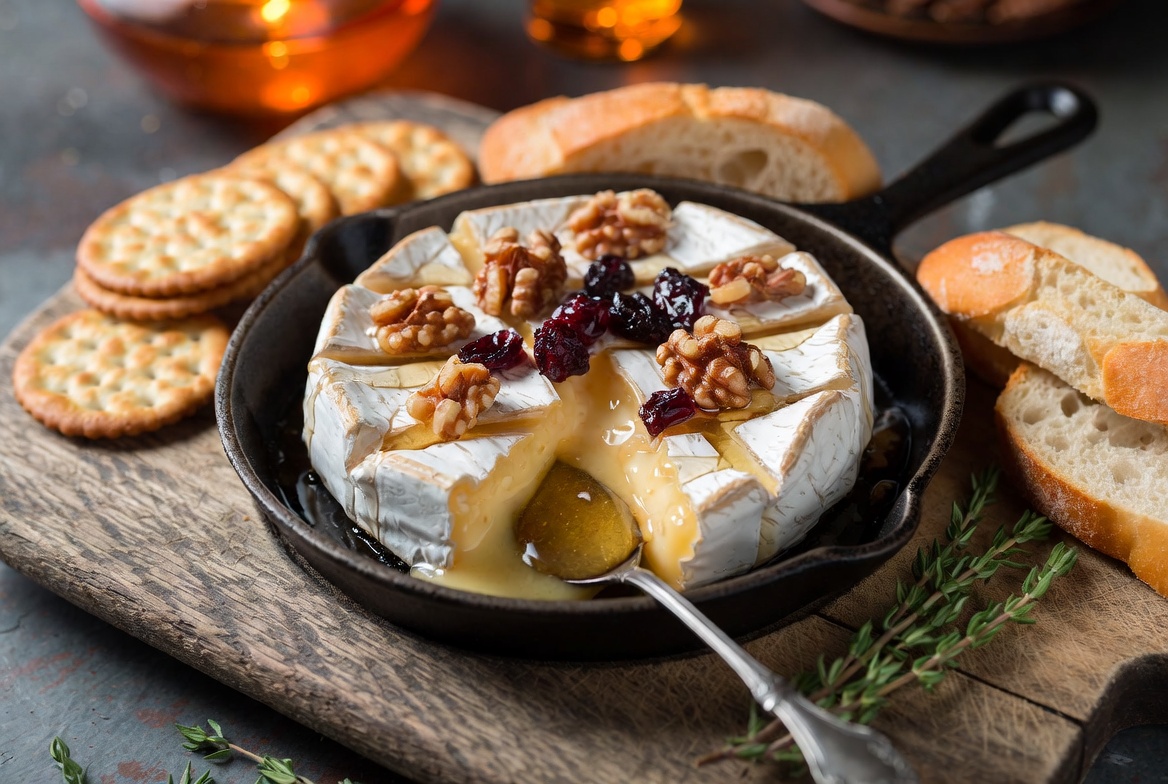
Baked Brie Appetizer: The Warm, Melty Thing Everyone Rushes the Table For
There’s a very specific kind of magic that happens when you put a wheel of brie in the oven and pull it out twenty minutes later as a bubbling, golden, impossibly gooey masterpiece. People gather. Conversations pause. Someone always says “oh wow” before they’ve even tasted it. Baked brie is one of those rare appetizers that looks like you spent real time and energy on it—when the truth is, you basically just heated up a wheel of cheese and called it a dish. It’s warm, rich, slightly funky in the best possible way, and absolutely magnetic on any table you put it on. If you’ve never made it before, today is genuinely your lucky day.
Quick Look at the Recipe
| 🎯 Skill Level | ⏱️ Prep Time | 🔥 Cook Time | ⏰ Total Time |
|---|---|---|---|
| Beginner | 5 minutes | 15–20 minutes | ~25 minutes |
| 🍽️ Servings | 📋 Course | 🌍 Cuisine | 🔢 Calories |
|---|---|---|---|
| 6–8 | Appetizer | French-American | ~220 kcal/serving |
Why This Recipe is Awesome
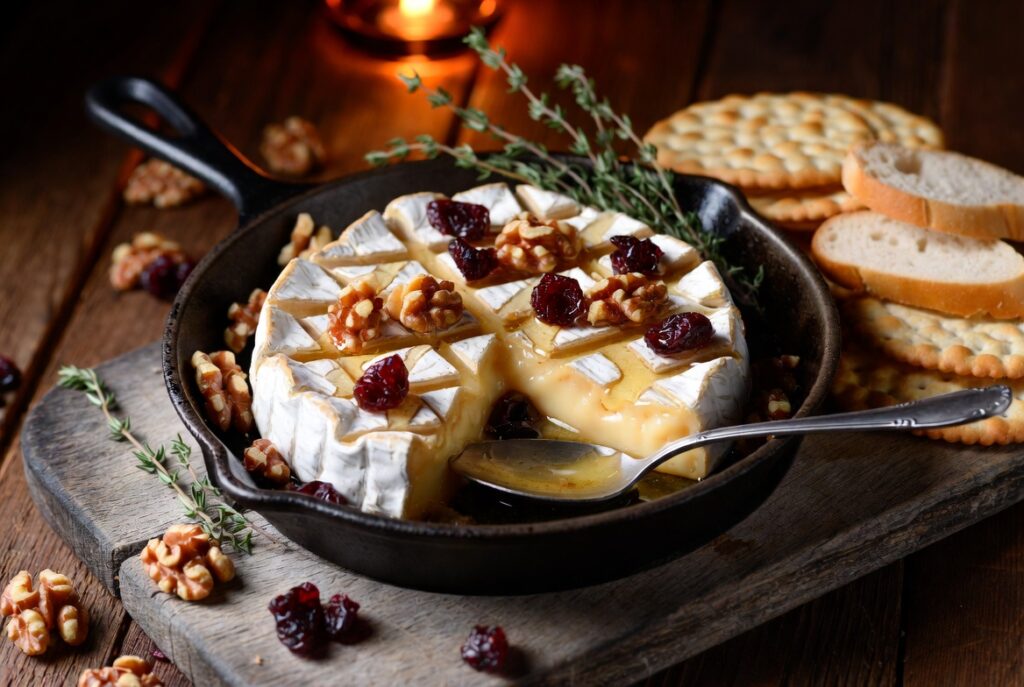
Let’s get one thing straight: baked brie requires almost zero skill, a handful of ingredients, and about twenty minutes of oven time. That means it is, objectively, one of the highest effort-to-reward ratios in the entire culinary universe. You put cheese in an oven. You take a legend out. Even the most kitchen-averse person on the planet can pull this off without breaking a sweat.
But here’s what really makes it spectacular—the transformation. Raw brie is good. Baked brie is on a completely different level. The heat softens the interior into a velvety, molten river of richness while the rind firms up just enough to hold everything together. Top it with honey, nuts, or jam, and you’ve created something that tastes genuinely complex and intentional. Guests will assume you know things. Let them believe it. There’s absolutely no need to explain that this took you less time to prep than it took to find parking.
Ingredients You’ll Need
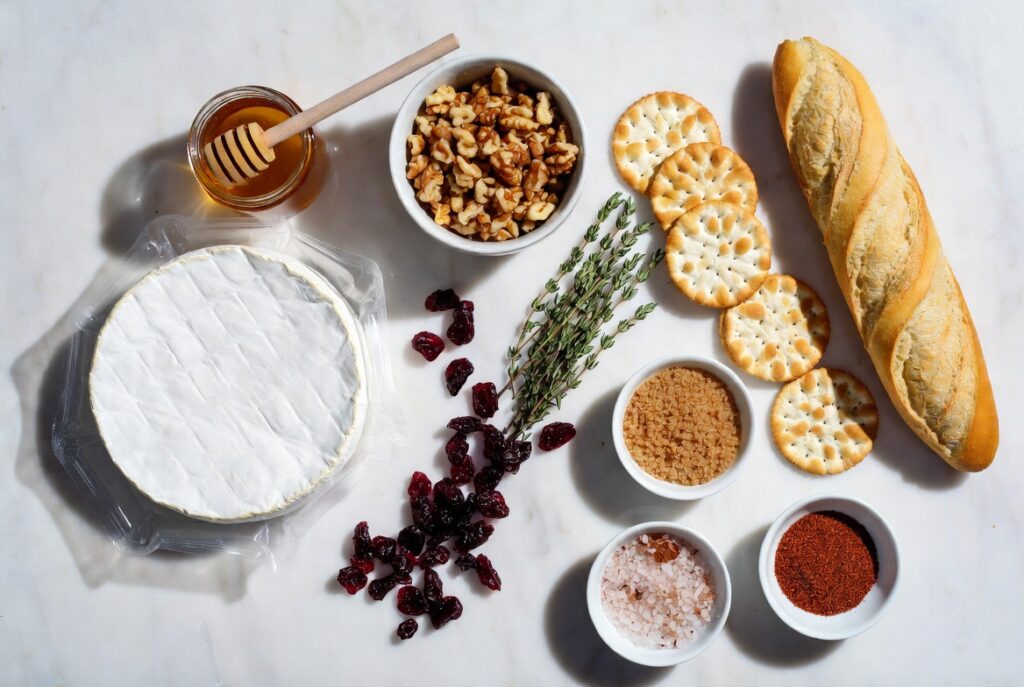
- [ ] 1 wheel of brie cheese (8 oz) — the whole star; buy a good quality round, not the individually wrapped slices from the deli drawer
- [ ] 2 tablespoons honey — for drizzling on top; wildflower or acacia honey both work beautifully
- [ ] ¼ cup chopped walnuts or pecans — toasted if possible; adds crunch and a nutty richness the brie absolutely loves
- [ ] 2 tablespoons dried cranberries or fresh thyme — choose your flavor direction: sweet and festive, or savory and herby
- [ ] 1 tablespoon brown sugar — optional, for a lightly caramelized, deeper sweetness on top
- [ ] Pinch of red pepper flakes — optional, for a tiny heat contrast that plays brilliantly against the rich cheese
- [ ] Flaky sea salt — just a small pinch at the end; it sharpens and elevates every other flavor on the plate
- [ ] Crackers, crostini, sliced baguette, or apple slices — your delivery vehicles; provide a variety if you want to look extra thoughtful
Recommended Tools

- Small oven-safe baking dish or cast iron skillet — something that holds the brie snugly so it doesn’t spread out flat as it melts
- Parchment paper — to line the baking dish and make cleanup effortless
- Sharp knife — to score the top of the brie if desired and for slicing bread
- Baking sheet — useful underneath the dish to catch any cheese that escapes
- Small dry skillet — for toasting the nuts in two minutes before adding them; this step is small and worth every second
- Spoon or honey wand — for drizzling honey with control and elegance rather than flooding the whole wheel
Step-by-Step Instructions
- Preheat your oven to 375°F (190°C). This is non-negotiable and yes, it matters—don’t try to shortcut this with a higher temperature or you’ll get a browned exterior and a cold center. Start the oven first, then do everything else.
- Prepare your brie. Take it out of any packaging and place it on a parchment-lined baking dish or small cast iron skillet. Score the top lightly with a sharp knife in a crosshatch pattern—just shallow cuts through the rind. This helps the heat penetrate and gives the toppings somewhere to nestle.
- Add your toppings. Drizzle honey directly over the scored top of the brie. Scatter your chopped nuts, dried cranberries or fresh thyme, and brown sugar (if using) over the top. Press them gently so they don’t roll off the second the cheese starts to soften.
- Bake for 15–20 minutes. Place the dish in the preheated oven and bake until the brie is visibly soft when you gently press the top, the rind looks golden at the edges, and any toppings have caramelized slightly. Do not overbake—you want molten, not exploded.
- Rest for two minutes after pulling it from the oven. Just two minutes—enough for the most explosive liquid cheese to settle slightly so it doesn’t immediately flood off the plate. Add a pinch of flaky salt and red pepper flakes at this stage.
- Serve immediately with your crackers, crostini, or sliced apples fanned around the brie on the serving board. Break into it at the table with a knife or spoon and let the melty interior spill out. Watch the room react. Enjoy your moment.
Nutrition Facts
Serving Size: 1/8 of recipe | Servings: 6–8
| Nutrient | Amount Per Serving |
|---|---|
| Calories | 220 kcal |
| Total Fat | 16g |
| — Saturated Fat | 9g |
| — Unsaturated Fat | 6g |
| Cholesterol | 45mg |
| Sodium | 320mg |
| Total Carbohydrates | 10g |
| — Dietary Fiber | 0.5g |
| — Sugars | 8g |
| Protein | 10g |
| Calcium | 12% DV |
| Vitamin A | 8% DV |
| Iron | 4% DV |
Estimates based on standard ingredients. Values vary depending on brie brand, honey quantity, and specific toppings used. Does not include bread or crackers for serving.
Recipe Variations
- Fig Jam & Rosemary Baked Brie: Spread a generous spoonful of fig jam over the top instead of honey, press in a few fresh rosemary sprigs, and scatter toasted walnuts across. Sweet, savory, herby, and deeply sophisticated-looking for something that took four minutes to assemble.
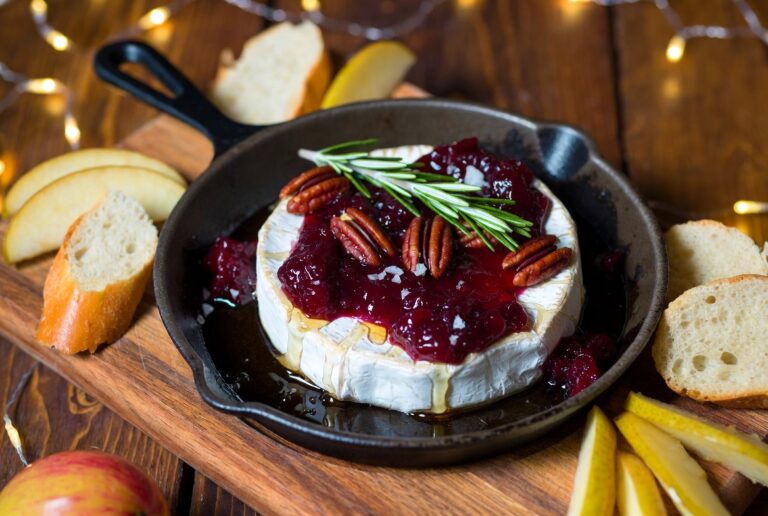
- Cranberry & Pecan Holiday Brie: Top with whole berry cranberry sauce, chopped pecans, and a pinch of cinnamon before baking. It’s festive, colorful, and tailor-made for holiday entertaining—guaranteed to disappear within ten minutes of hitting the table.
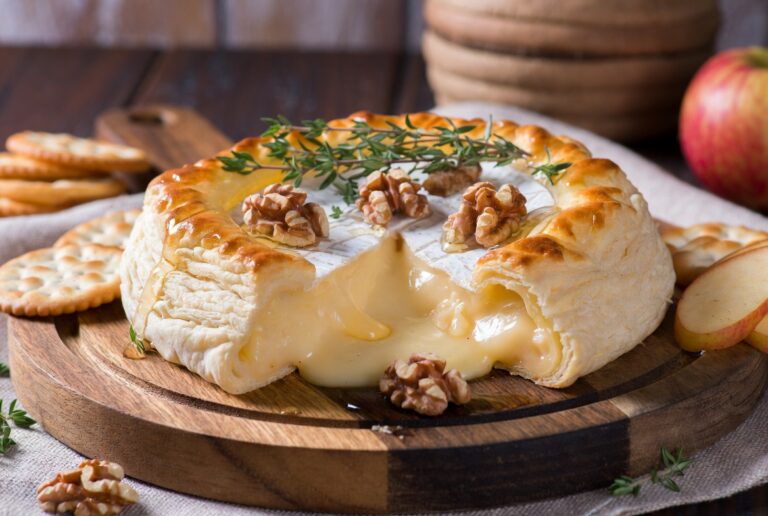
- Pastry-Wrapped Baked Brie: Wrap the entire brie wheel in a sheet of store-bought puff pastry, seal the edges, brush with egg wash, and bake at 400°F for 20–25 minutes until golden. It’s showier, flakier, and takes the drama to an entirely new level with minimal extra effort.
Explore Similar Recipes
Recommended Ways to Serve
- As a classic cocktail hour appetizer: Set the baked brie on a wooden board surrounded by crackers, sliced baguette, grapes, and apple slices. It’s self-contained, shareable, and gives guests something to graze on while you finish pulling the rest of the meal together.
- On a full charcuterie board: Use the warm baked brie as the centerpiece of a larger spread with cured meats, cornichons, olives, dried fruit, and an assortment of cheeses. The warm, melty brie against the cooler elements on the board creates a contrast that makes every bite interesting.
- As a dessert-adjacent course: Serve it after the main with extra honey, sliced pears, and a glass of dessert wine or port. IMO this is one of the most underrated ways to end a dinner—cheese instead of a full dessert, warm and indulgent, without the heaviness of a full sweet course.
Storing and Reheating Guidelines
- Storage: Let any leftover brie cool completely, then transfer it to an airtight container and refrigerate for up to 2 days. The texture will firm back up in the fridge, but it’s still completely usable—think of it as a very good spreadable cheese situation.
- Reheating: Place leftover brie in a 300°F oven for 8–10 minutes until it softens again. Avoid the microwave—it heats unevenly, turns the rind rubbery, and generally disrespects everything the brie stood for in its glory days.
- Pastry-wrapped leftovers: If you made the puff pastry version, reheat in the oven at 325°F for 10–12 minutes to restore some of the pastry’s crispness. It won’t be quite as flaky as fresh, but it will still be excellent and worth reheating properly.
Common Mistakes to Avoid & Fixes
| ❌ Mistake | ✅ Fix |
|---|---|
| Not preheating the oven | Cold oven, cold center, ruined vibe. Always preheat fully before the brie goes in. This is Baking 101 and also just basic respect for the cheese. |
| Overbaking until the brie collapses | Check it at 15 minutes. Once the top gives gently when pressed, it’s done. Baking past that point turns your elegant appetizer into a greasy flat puddle. |
| Using a dish that’s too large | If the brie has too much room around it, it spreads sideways as it melts instead of staying as a cohesive, beautiful wheel. Use a snug-fitting dish every time. |
| Skipping the scoring on top | Without scored cuts, the rind forms a tight seal that traps heat inside and can cause the cheese to burst through the side unpredictably. Score it—it takes ten seconds and makes a real difference. |
| Adding toppings after baking | Honey and nuts added post-oven just sit cold on top of hot cheese. Add them before baking so they caramelize, meld in, and become part of the whole flavor experience rather than an afterthought. |
| Serving on a cold plate | A cold plate pulls heat out of the brie quickly. Use a warm wooden board or a plate that’s been sitting near the oven. It keeps the brie softer for longer while people are serving themselves. |
Alternatives & Substitutions
- Swap brie for camembert if that’s what’s available—they’re closely related, behave nearly identically when baked, and taste equally magnificent. Camembert has a slightly earthier, more intense flavor profile that some people actually prefer. No shame in that.
- Replace honey with maple syrup for a deeper, more caramel-like sweetness. It works wonderfully and pairs especially well with pecans and a pinch of cinnamon if you’re making a fall-themed version.
- Use sliced almonds instead of walnuts or pecans for a lighter, more delicate crunch. They toast beautifully in the oven and don’t overpower the cheese the way larger nut pieces occasionally can.
- Swap dried cranberries for dried apricots or golden raisins for a sweeter, less tart fruit element. Dried apricots in particular add a gorgeous color and a jammy softness that works beautifully against the warm cheese.
- Try fresh herbs instead of sweet toppings for a fully savory version—fresh rosemary, thyme, and a drizzle of olive oil with cracked black pepper creates a completely different but equally spectacular flavor profile. FYI, this savory version pairs especially well with a full charcuterie board spread.
FAQ (Frequently Asked Questions)
Q. Do I need to remove the rind before baking brie? Ans: Absolutely not—and please don’t. The rind is edible, holds everything together during baking, and actually develops a slightly firmer, more interesting texture in the oven. It’s doing structural work. Leave it on, bake it whole, and eat the whole thing without guilt.
Q. Can I bake brie straight from the fridge or does it need to come to room temperature first? Ans: You can bake it cold, but letting it sit at room temperature for 15–20 minutes before it goes in the oven gives you more even melting and a softer, creamier interior result. It’s not mandatory, but it is noticeably better. Worth the minimal wait.
Q. What size brie wheel should I buy? Ans: An 8 oz wheel is the sweet spot for 6–8 people as an appetizer—generous but not overwhelming. If you’re feeding a larger crowd or want leftovers you definitely won’t regret, go for a 16 oz wheel and add a few extra minutes to the bake time.
Q. Can I prepare baked brie in advance for a party? Ans: You can add all the toppings to the brie wheel up to a few hours ahead and keep it refrigerated until you’re ready to bake. Just pop it in the oven about 20 minutes before guests arrive. Don’t bake it ahead and reheat—it loses that magical fresh-from-the-oven, just-broken-into quality that makes it so irresistible.
Q. What do I do if my brie starts leaking out the sides in the oven? Ans: First, don’t panic—it still tastes exactly the same. This happens when the brie is over-ripe, the dish is too large, or it baked a touch too long. Next time, use a snugger dish and check it a few minutes earlier. For now, scoop up the escaped cheese with a spoon and drizzle it over the top. Problem solved deliciously.
Q. Is baked brie supposed to be fully melted all the way through? Ans: Ideally yes—the interior should be fully soft and flowing when you cut or spoon into it. If the very center still feels slightly firm, give it another 3–5 minutes. Every oven runs slightly differently, so use the gentle-press test on top as your guide rather than relying purely on timing.
Q. What’s the best wine to serve with baked brie? Ans: A lightly sweet white wine like Riesling or Gewürztraminer is a classic pairing—the sweetness mirrors the honey and fruit toppings beautifully. A dry Champagne or sparkling wine also works brilliantly because the bubbles cut through the richness of the cheese. If red is more your style, a light Pinot Noir is the move.
Latest Articles
-

7 Brew Coffee Drinks: The Copycat Recipes Your Wallet Will Thank You For
-

-

-

-

🥕 Carrot Smoothie: The Drink That Makes You Feel Like a Wellness Guru (Without the Effort)
-

Breakfast Smoothie Bowl: The Morning Glow-Up Your Spoon Deserves
Final Thoughts
Baked brie is one of those recipes that earns a permanent spot in your entertaining rotation from the very first time you make it. It’s warm, effortlessly impressive, universally loved, and endlessly adaptable—sweet, savory, wrapped in pastry, loaded with fruit, topped with herbs. However you dress it up, the brie itself does the real work. Your job is just to not overbake it and to make sure there’s enough bread within arm’s reach when it comes out of the oven.
Whether you’re hosting a holiday party, a casual weekend gathering, or just treating yourself to something genuinely indulgent on a quiet evening—this recipe delivers every single time without fail. Now go impress someone—or yourself—with your new culinary skills. You’ve earned it! 🧀✨