Peach Burrata Appetizer: The Summer Plate That Makes Everyone Stop Mid-Conversation
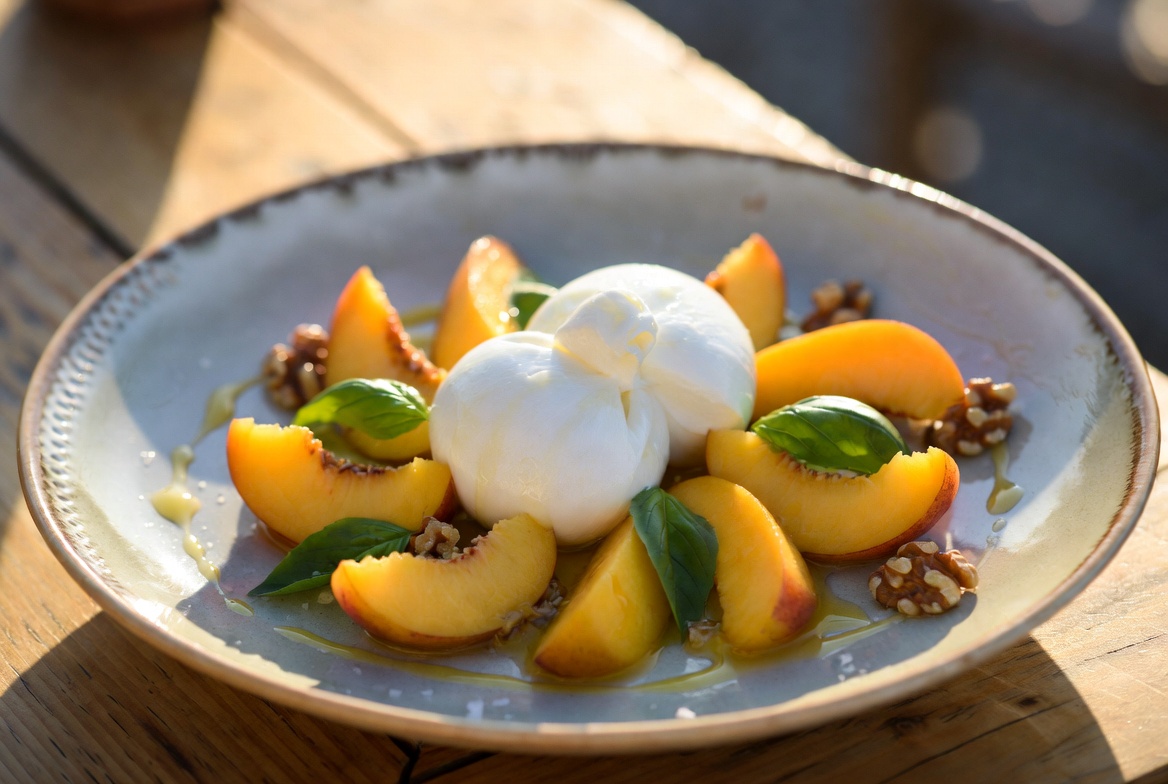
You know that moment at a dinner party when someone puts a dish on the table and the entire room goes quiet for a second? That’s what peach burrata does. It’s outrageously pretty, tastes like someone bottled a perfect summer afternoon, and takes about ten minutes to assemble. Sweet, juicy peaches. Creamy, cloud-like burrata. A drizzle of honey and olive oil that ties the whole thing together like a culinary bow. It sounds fancy. It is not fancy. It is, however, absolutely the move for any occasion where you want to look like you really have your life together—even if, like the rest of us, you absolutely do not.
Quick Look at the Recipe
| 🎯 Skill Level | ⏱️ Prep Time | 🔥 Cook Time | ⏰ Total Time |
|---|---|---|---|
| Beginner | 10 minutes | None | 10 minutes |
| 🍽️ Servings | 📋 Course | 🌍 Cuisine | 🔢 Calories |
|---|---|---|---|
| 4 | Appetizer | Modern Italian | ~270 kcal/serving |
Why This Recipe is Awesome
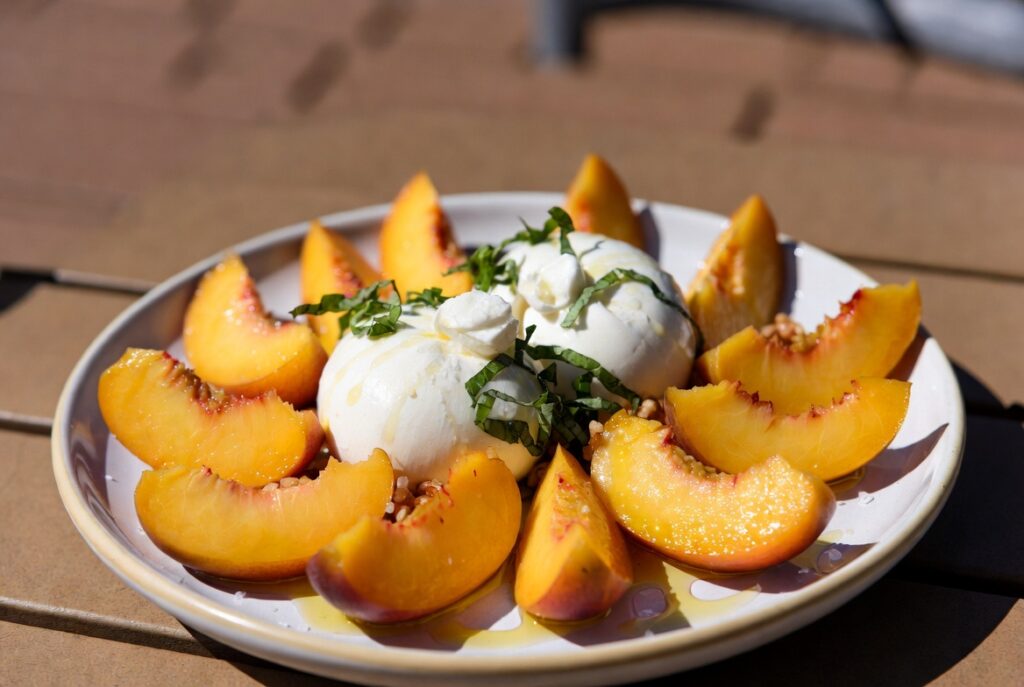
Where do we even begin? First of all, there is zero cooking involved. None. You don’t turn on a single burner or preheat anything. You just slice, arrange, drizzle, and serve. It’s genuinely impossible to mess up—and I say that as someone who has found ways to ruin boiling water.
But beyond the ease of it all, the flavor combination here is legitimately inspired. Ripe summer peaches bring floral sweetness and a gentle acidity that cuts straight through the rich, buttery burrata like it was always meant to be there. Add honey for depth, fresh basil for brightness, and a pinch of flaky salt to sharpen everything—and you have a dish that tastes like it belongs on a restaurant menu, not a Tuesday night kitchen counter. The color alone is enough to make people pull out their phones before they even pick up a fork. FYI, that’s always a good sign.
Ingredients You’ll Need
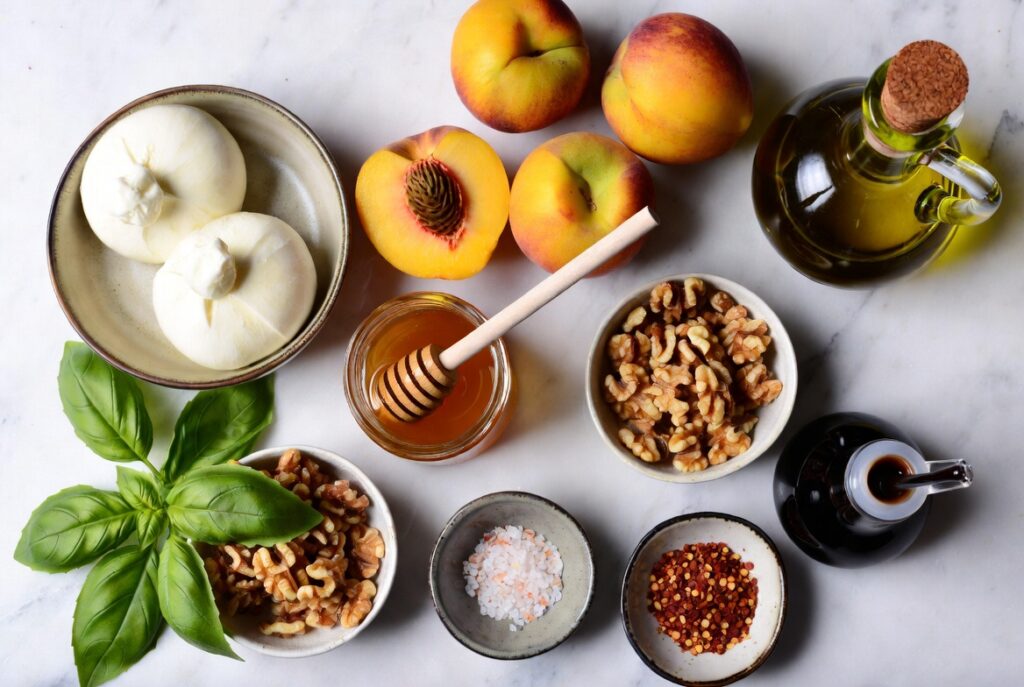
- [ ] 2 fresh burrata balls (8 oz total) — the creamy, dreamy centerpiece; buy the freshest available
- [ ] 3–4 ripe yellow peaches — fragrant, slightly soft, and genuinely sweet; not the rock-hard imposters from the discount bin
- [ ] 2 tablespoons extra virgin olive oil — quality olive oil only; this is a finishing oil situation, not a cooking oil situation
- [ ] 1½ tablespoons honey — wildflower or acacia honey work beautifully; hot honey if you’re feeling bold
- [ ] 1 tablespoon balsamic glaze — optional but adds gorgeous depth and visual drama
- [ ] Flaky sea salt — Maldon is the gold standard; this ingredient does more work than people give it credit for
- [ ] Freshly cracked black pepper — from a real grinder, always
- [ ] Large handful of fresh basil leaves — torn, not chopped; we’ve established by now that torn basil is simply superior
- [ ] ¼ cup toasted walnuts or pistachios — for crunch and a nutty richness that plays beautifully against the fruit and cheese
- [ ] Pinch of red pepper flakes — optional, for a little heat that contrasts wonderfully with the sweetness
- [ ] Crusty bread, crostini, or crackers — your vehicle for getting all this goodness into your mouth
Recommended Tools
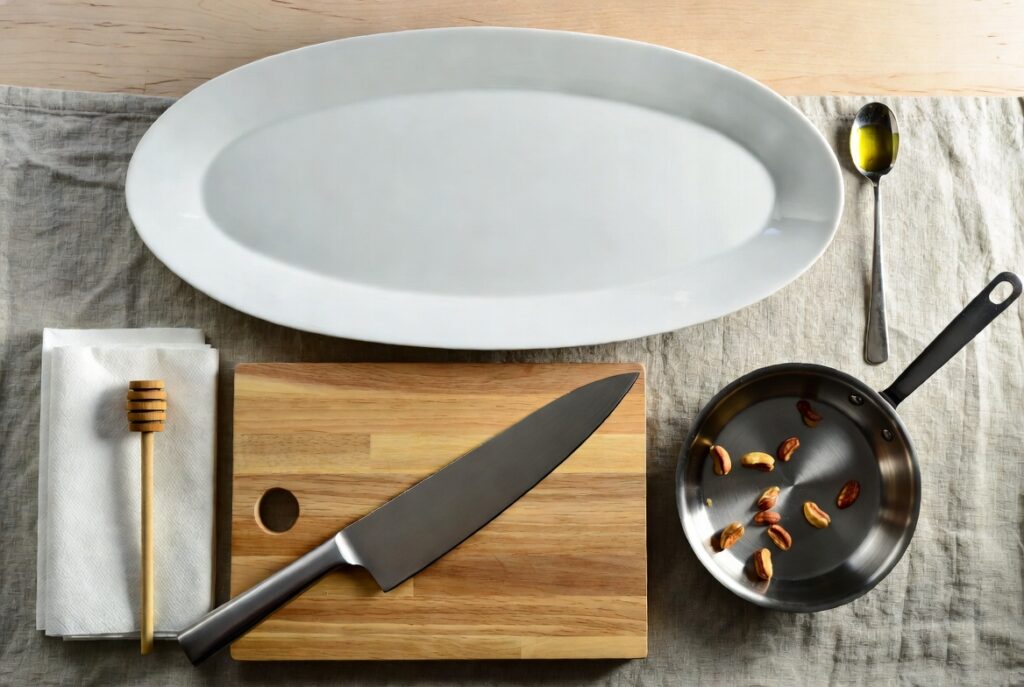
- Large flat serving platter or wide wooden board — you want space to spread everything out and make it look effortlessly abundant
- Sharp chef’s knife — for clean, even peach slices that don’t bruise or tear
- Cutting board — one you don’t mind getting peachy and sticky
- Paper towels — to gently pat the burrata dry before placing it on the plate
- Small drizzle spoon or honey wand — for controlled, elegant honey and olive oil application
- Dry skillet or small pan — only if you’re toasting the nuts, which takes about two minutes and is very much worth it
Step-by-Step Instructions
- Pull your burrata from the fridge 20 minutes before serving. Room temperature burrata is everything this dish promises—soft, creamy, and ready to ooze the moment you cut into it. Cold burrata straight from the fridge is dense and underwhelming. Give it time.
- Toast your nuts (if using). Place walnuts or pistachios in a dry skillet over medium heat for 2–3 minutes, shaking the pan occasionally, until fragrant and lightly golden. Watch them closely—nuts go from perfectly toasted to scorched in about fifteen seconds. Set aside to cool.
- Slice the peaches. Cut them into wedges roughly ½ inch thick—not too thin or they’ll fall apart, not too thick or they’ll dominate the plate. Leave the skin on for color and texture. Fan the slices across your serving platter in a relaxed, overlapping arrangement.
- Add the burrata. Gently pat each ball dry with a paper towel and place them in the center of the peach arrangement, nestled slightly into the fruit. If you want to get a little dramatic about it, use a spoon to gently break the top of one burrata ball so the creamy interior starts to peek out. People will lose their minds.
- Season and drizzle. Sprinkle flaky sea salt and cracked black pepper over the peaches and burrata. Drizzle olive oil generously across everything, then follow with honey in a slow, deliberate pour. Add the balsamic glaze in a thin zigzag if using.
- Finish and serve immediately. Scatter torn basil leaves and toasted nuts across the top, add a pinch of red pepper flakes if desired, and bring the platter straight to the table. Serve with crusty bread or crostini on the side. Eat it fresh—this dish does not wait.
Nutrition Facts
Serving Size: 1/4 of recipe | Servings: 4
| Nutrient | Amount Per Serving |
|---|---|
| Calories | 270 kcal |
| Total Fat | 20g |
| — Saturated Fat | 9g |
| — Unsaturated Fat | 10g |
| Cholesterol | 40mg |
| Sodium | 260mg |
| Total Carbohydrates | 14g |
| — Dietary Fiber | 1.5g |
| — Sugars | 12g |
| Protein | 10g |
| Vitamin C | 12% DV |
| Calcium | 18% DV |
| Iron | 5% DV |
| Vitamin A | 8% DV |
Estimates based on standard ingredients. Values vary depending on peach ripeness, honey quantity, and specific brands used.
Recipe Variations
- Grilled Peach Burrata: Brush peach wedges with a little olive oil and grill them on high heat for 2–3 minutes per side until you get those gorgeous char marks. The caramelization adds a smoky depth that makes the whole dish feel wildly sophisticated for zero extra effort.
- Prosciutto Peach Burrata: Drape thin slices of prosciutto di Parma across the peaches before adding the burrata. Sweet fruit, salty cured meat, creamy cheese—it’s the holy trinity of appetizer ingredients working in perfect harmony.
- Spicy Honey Peach Burrata: Swap regular honey for hot honey and add thinly sliced fresh chili across the top. The sweet heat against the cool, creamy burrata and juicy peaches is genuinely one of the best flavor combinations you’ll encounter all summer.
Explore Similar Recipes
Recommended Ways to Serve
- As a standalone summer starter: Bring the whole platter to the table as the first course with a basket of warm crostini. It sets a stunning, season-forward tone for the entire meal and gives guests something beautiful to photograph before dinner properly begins.
- As part of a grazing board: Place the peach burrata platter at the center of a larger charcuterie spread with cured meats, aged cheeses, olives, and crackers. It becomes the visual anchor of the whole board and the first thing every single person reaches for.
- As a light lunch: Serve the platter over a bed of fresh arugula with extra bread and a chilled glass of rosé or Prosecco. IMO this is the ideal weekday summer lunch—effortless, nourishing, and quietly luxurious in a way that makes ordinary Tuesday feel like a holiday.
Storing and Reheating Guidelines
- Eat it fresh: This dish is at its absolute peak the moment it’s assembled. Peaches release juice quickly once sliced and salted, and burrata’s texture changes significantly within hours. Make it, serve it, eat it—in that order, ideally within 20 minutes of plating.
- Store components separately: If you must save leftovers, keep sliced peaches in one airtight container and burrata in another with a splash of cold water to help maintain its texture. Refrigerate and consume within 24 hours, accepting that it will be good but not quite the same.
- No reheating required: This is a cold, no-cook dish through and through. If refrigerated components feel too cold, let them sit at room temperature for 10–15 minutes before serving. That’s the extent of your “reheating” process—and it’s about as demanding as this recipe ever gets.
Common Mistakes to Avoid & Fixes
| ❌ Mistake | ✅ Fix |
|---|---|
| Using underripe, hard peaches | Hard peaches taste like disappointment wrapped in fuzzy skin. Buy peaches that smell sweet and yield slightly when gently pressed. If yours are firm, leave them on the counter for a day or two. |
| Skipping the salt on the peaches | Salt on fruit sounds counterintuitive but it’s transformative—it draws out juice and intensifies the natural sweetness. Don’t skip it. Season the peaches directly before adding the burrata. |
| Serving cold burrata | Room temperature burrata is creamy and dreamy. Cold burrata is firm and forgettable. Always rest it outside the fridge for at least 20 minutes before serving. Always. |
| Drowning everything in honey | Honey is a drizzle, not a sauce. Too much and the whole dish becomes cloyingly sweet with nowhere to go. A light, intentional pour is all you need. |
| Assembling too far ahead | Peaches release liquid as they sit with salt, which pools on the plate and makes everything soggy. Assemble no more than 10–15 minutes before serving for the best presentation and texture. |
| Skipping the toasted nuts | Raw nuts are fine. Toasted nuts are genuinely better—more flavor, more crunch, more depth. Two minutes in a dry pan makes a real difference. Don’t skip this step. |
Alternatives & Substitutions
- Swap peaches for nectarines if peaches aren’t available—they’re essentially the same fruit without the fuzz and work identically in this recipe. Zero adjustment needed, full flavor delivered.
- Use fresh mozzarella instead of burrata if burrata is hard to find. It won’t have that spectacular creamy interior, but it still pairs beautifully with the peaches and carries the dish well.
- Replace honey with maple syrup for a slightly deeper, earthier sweetness. It works surprisingly well and gives the dish a subtly different character that’s worth trying at least once.
- Swap walnuts for toasted pecans or pine nuts depending on what you have. Pecans lean sweeter; pine nuts are more delicate and buttery. Both are excellent choices alongside the peaches and cheese.
- Use fresh mint instead of basil for a cooler, more refreshing herbal note—especially wonderful in the height of summer when mint is growing like it owns the garden and basil is being dramatic about the heat.
FAQ (Frequently Asked Questions)
Q. Can I use canned peaches if fresh ones aren’t in season? Ans: Technically yes, but with a significant caveat—drain them extremely well and pat them dry, because canned peaches carry a lot of syrup that will make your plate watery and overly sweet. Fresh, ripe, in-season peaches are genuinely irreplaceable here. If peaches aren’t in season, consider making this with ripe pears or figs instead—both are spectacular with burrata.
Q. How ripe should the peaches be? Ans: Ripe enough to smell sweet and give slightly when you press them gently near the stem. Not so ripe that they’re mushy and falling apart—those won’t hold their shape when sliced. If your peaches are borderline overripe, they’ll still taste great but slice them more thickly and handle them gently.
Q. Can I grill the peaches ahead of time and refrigerate them? Ans: Yes, grilled peaches can be made a few hours ahead and stored at room temperature (not the fridge—cold kills their texture). Bring them back to room temp before assembling the platter. They’ll still have those beautiful grill marks and caramelized flavor when you’re ready to plate.
Q. What if I don’t like honey—can I leave it out? Ans: Absolutely. The dish still works beautifully with just olive oil and balsamic glaze. You can also try a light drizzle of agave syrup or even a squeeze of fresh orange juice over the peaches for sweetness without the honey flavor specifically.
Q. What wine pairs best with peach burrata? Ans: Something with a touch of sweetness or bright acidity to mirror the peaches without overpowering the creamy cheese. A chilled Prosecco, dry rosé, or a lightly oaked Chardonnay all work brilliantly. If you want to go full summer mode, a glass of cold Aperol Spritz alongside this platter is genuinely one of life’s great simple pleasures.
Q. Can this be made vegan? Ans: The burrata is the dairy component, so traditional versions aren’t vegan. However, several specialty stores now carry cashew-based burrata alternatives that mimic the texture reasonably well. Replace the honey with maple syrup and you have a fully plant-based version that still looks and tastes impressive.
Q. How many people does this serve as an appetizer? Ans: As written, this serves four generously as a starter. Hosting a larger crowd? Simply add more peaches and another burrata ball—the recipe scales up effortlessly. More fruit, more cheese, more platter space, same ten minutes of effort. This recipe is nothing if not accommodating.
Latest Articles
-

7 Brew Coffee Drinks: The Copycat Recipes Your Wallet Will Thank You For
-

-
-

-
🥕 Carrot Smoothie: The Drink That Makes You Feel Like a Wellness Guru (Without the Effort)
-
Breakfast Smoothie Bowl: The Morning Glow-Up Your Spoon Deserves
Final Thoughts
Peach burrata appetizer is summer cooking at its most honest and joyful—no tricks, no fuss, just beautiful ingredients treated with a little care and a lot of good taste. It’s the kind of dish that reminds you why simple food, made with genuinely great ingredients, almost always wins. You don’t need a complicated recipe or a professional kitchen to create something that makes people genuinely excited to sit down at your table.
Whether you make this for a backyard gathering, a quiet dinner for two, or just yourself on a warm evening with a glass of something cold—it will deliver every single time. Now go impress someone—or yourself—with your new culinary skills. You’ve earned it! 🍑🧀